Colour Thinking with Turner: Layered Watercolour Routines
The practical value of layered thinking
Turner often worked by building atmosphere through successive layers of wash, thoughtfulness about edges, and deliberate restraint in detail. Translating that method into small watercolour routines cultivates patience and an understanding of how transparent layers interact to create depth and light.
Materials and a modest palette
Keep a small palette: a warm and cool for each primary colour (e.g., warm red, cool red, warm yellow, cool yellow, warm blue, cool blue), a neutral grey or Payne’s grey, and good quality watercolour paper (preferably 300gsm). Brushes should include a flat wash brush and a round point for details.
Three layered routines (30–60 minutes)
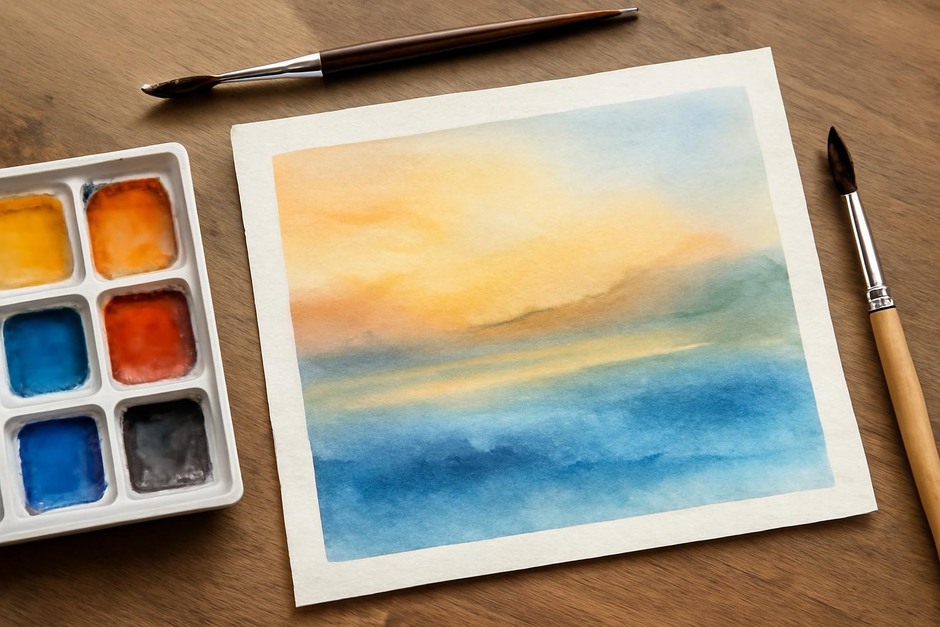
- Atmospheric wash (30–40 minutes): Wet the paper lightly and lay a pale wash suggesting sky and ground. Let it dry partially, then glaze a cooler or warmer wash to create depth. Focus on changing temperature and transparency rather than adding details. The aim is to suggest air and distance.
- Edge control drill (30 minutes): Paint a simple horizon and two overlapping forms. While the paint is wet, soften one edge with a damp brush to create a lost edge; leave the other edge sharper after drying slightly. Repeat across three studies, varying which edge is lost. This trains deliberate edge choices.
- Glaze and detail (45–60 minutes): Begin with a pale multi-colour wash. Once dry, add a thin glaze to enrich a local colour and a second glaze for shadow. Finish with restrained details using a small round brush. The focus is on restraint: avoid overworking the surface.
Routine rhythm
Use these exercises as part of a weekly rhythm. One shorter session of atmospheric washes midweek and a longer glaze-and-detail study at the weekend works well. Keep notes about which glazes produced clarity versus muddiness, and how many layers your paper tolerates before the surface weakens.
Practical tips and constraints
- Test mixes on a scrap piece before applying to the study.
- Keep water clean to maintain transparency.
- Limit the number of layers in a single area to prevent lifting and muddying.
Working with a limited palette helps you learn relationships between colours rather than relying on many premixed options. Turner’s handling teaches control of atmosphere through subtle shifts in temperature and value — lessons you can practise in modest, repeatable sessions.
Over time, these rituals encourage thinking in layers rather than in discrete colour patches. That way of seeing carries into other media and makes decisions about light and mood feel less accidental and more intentional.