Visual Questions: Using Still Life Traditions to Train Attention and Narrative
Still life as a source of questions
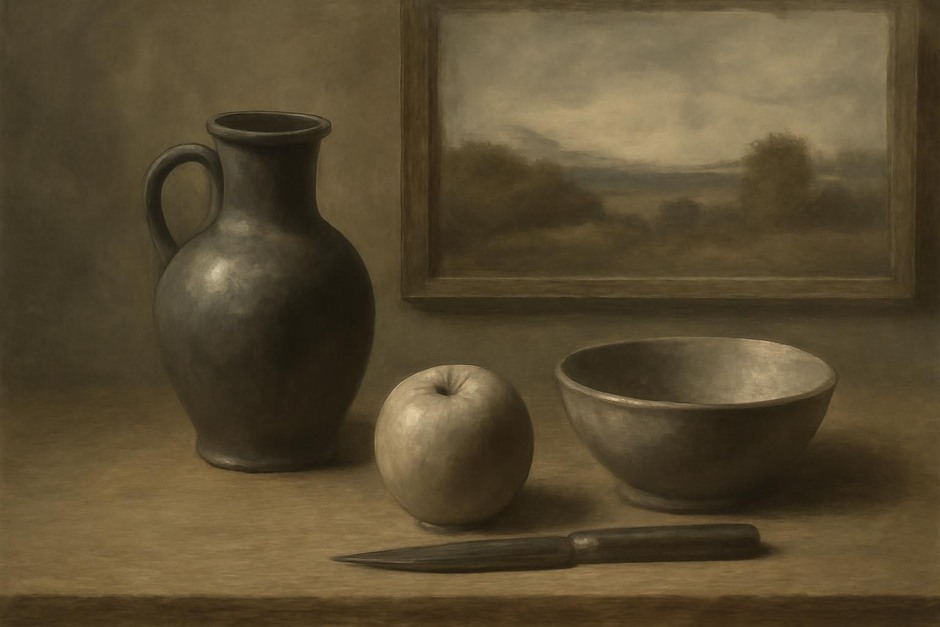
Still life traditions, from Dutch vanitas to domestic arrangements, offer a rich vocabulary for thinking about objects as carriers of narrative and attention. Instead of aiming for exact rendering, use objects to pose questions: What does this grouping imply? How does scale alter emphasis? Which object holds the story?
Materials and a simple setup
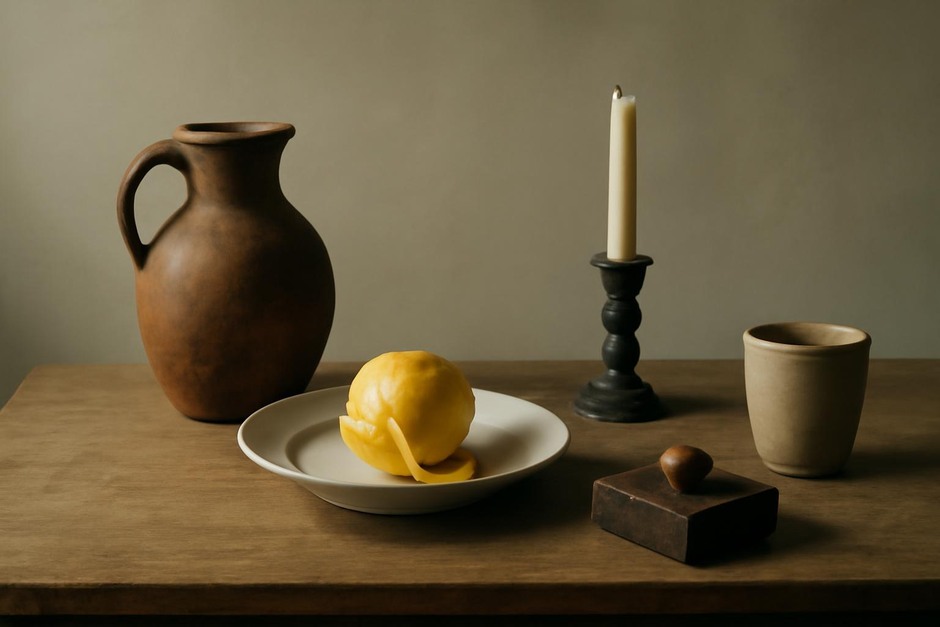
Collect three to five ordinary objects: a bowl, a ceramic cup, a folded cloth, a book, and a small plant or fruit. Arrange them on a table near a single light source. Use a sketchbook, pencil, and a darker marker for contrast studies.
Three exercises (20–45 minutes)
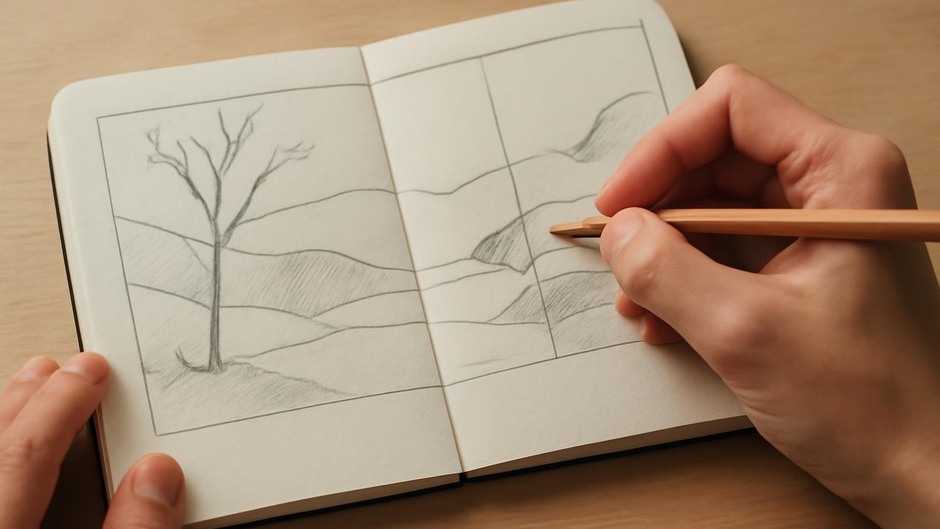
- Question thumbnails (20 minutes): Make six small thumbnails, each asking a different question about the arrangement: Which object is dominant? What if the light came from the opposite side? How does changing scale alter focus? Keep answers visual and immediate.
- Sequence study (30 minutes): Create a sequence of three studies that show a small change: move one object slightly, alter the light, or remove an element. Observe how the narrative and relationships between objects shift. The exercise trains sensitivity to small decisions.
- Symbol and restraint (40–45 minutes): Choose one object as a symbol and reduce the rest to supporting shapes. Paint or draw the main object carefully, and keep supporting objects simple. This practice highlights the impact of selective emphasis and restraint.
Routine integration and reflection
Include a short still life session once a week and alternate between quick thumbnails and a longer sequence. Afterward, write two short notes about the strongest visual decision made and one thing you would try next time. These reflections convert transient observations into lasting learning.
Applying the habit beyond still life
The practice of posing visual questions carries across genres. Whether sketching a street scene or composing a figure study, ask similar queries: What is the dominant element? How does light direct attention? What narrative is suggested by the arrangement? Training this habit with simple objects makes it habitual elsewhere.
Historical still life practices teach you how to convert arrangement into thought. By using small, repeatable routines — thumbnails, sequences, and selective emphasis — you learn to see objects not only for their surface but for their potential to hold and direct meaning. These are practical skills for sketchbook work, studio painting, and visual analysis alike.