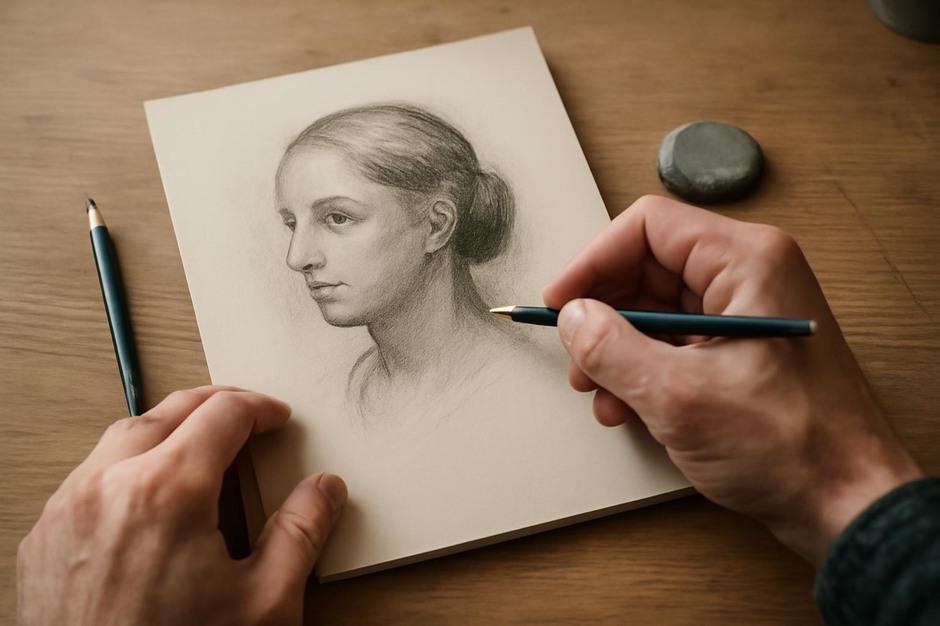
Everyday Portraiture: Small Routines Inspired by Renaissance Workshops
What workshop routines offer to a modern practice
Renaissance workshops operated by repetition, modular training, and incremental refinement. Apprentices practised proportion, simplified construction, and layered details under a master’s guidance. Translating those habits into small daily routines yields consistent improvement without needing extended sittings.
Simple tools and constraints
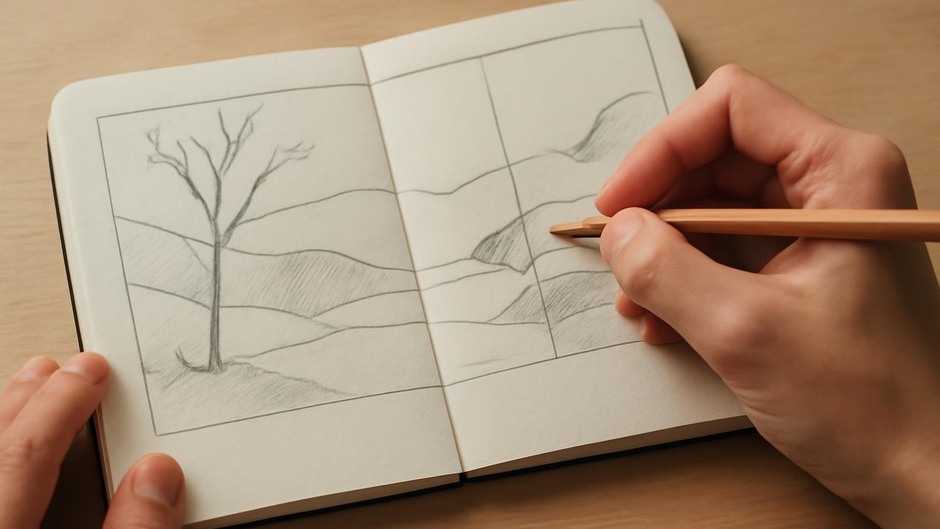
Work with a small mirror or a friend for short sittings. Keep a soft pencil (2B or 4B), a small sketchbook, and a thin marker for final marks. Set a timer so sessions stay compact and focussed.
Three portrait drills (10–40 minutes)
- Measure and map (10–15 minutes): Start by mapping key proportions: draw an oval for the head, mark the centre line, and place simple horizontal guides for brow, nose base, and chin. Use the edge of your pencil to measure relationships. The exercise teaches proportion more than likeness.
- Value planes (20 minutes): After the map, block in large planes of light and shadow with soft pencil or marker. Avoid details. Think in masses: cheek planes, forehead, neck shadow. This encourages thinking in form rather than line.
- Incremental refinement (30–40 minutes): Choose one small area — an eye or mouth — and refine it in stages, each stage taking five to ten minutes with short breaks. This mirrors workshop layering, where detail is added progressively rather than all at once.
Weekly routine and progression
Do a short measure-and-map session three times a week and one longer incremental refinement session on the weekend. Over a month, compare early maps with later ones to see improvements in proportion and confidence. If possible, repeat the same simple portrait a few times to notice how lighting choices alter your reading.
Framing progress and limitations
Renaissance apprentices also learned through repetition of the same motifs. You can emulate this by choosing a single subject (a self-portrait or a willing sitter) and sketching them in three-minute, ten-minute, and thirty-minute studies across several weeks. The constraint of the same subject reveals subtle improvement in measurement and tonal economy.
These routines adapt historical workshop habits into manageable, everyday practice. The focus is on building reliable observation and proportion habits, not on producing finished likenesses. Repetition, measured attention, and incremental refinement are practical tools you can apply whether you work in pencil, paint, or another medium.